Description
Most North India tours give you three cities. This 17-day private India tour package gives you seven — and six completely distinct civilisations that shaped the subcontinent over a thousand years. It is the best North India itinerary for travellers who want to go significantly beyond the standard Golden Triangle.
The Mughal Empire built the Taj Mahal, the Red Fort and Fatehpur Sikri.
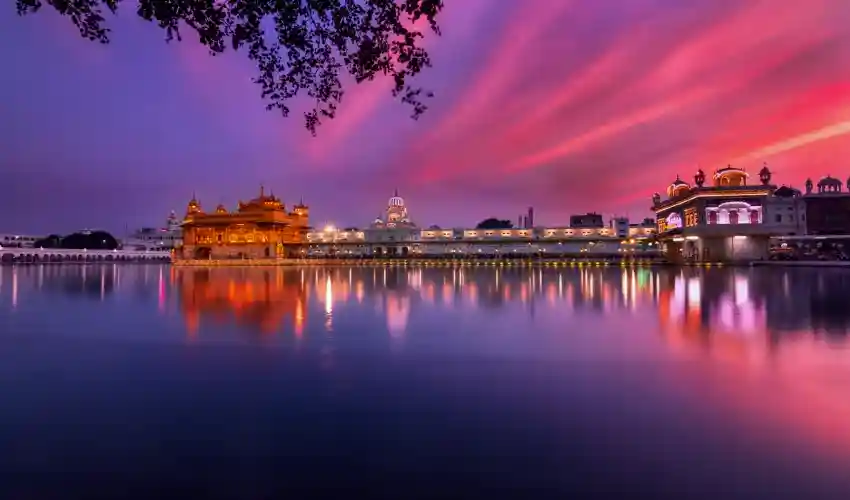
The Sikh civilisation built the Golden Temple — and feeds 100,000 people free every day.
The Tibetan civilisation, in exile since 1959, rebuilt itself in Dharamshala.
The British Raj made Shimla its summer capital — a hill station at 2,200 metres.
The Vedic and spiritual tradition flows from Rishikesh — Yoga Capital of the World.
The Rajput kingdom of Jaipur — the first planned city in India — rules its skyline still.
Seven cities. Six civilisations. One continuous luxury India tour — private, guided and fully customised.
The tour includes the UNESCO Kalka-Shimla Mountain Railway — 96 kilometres, 102 tunnels and 800 bridges, running since 1903 through the Shivalik Hills. One of the most extraordinary train journeys in Asia — included in full.
Fly into Delhi. From that moment — everything is taken care of.
Duration
17 Days 16 Nights
Language
English
Price
US$2130
HIGHLIGHTS
- Golden Temple at dawn — the gold reflected on the Pool of Nectar
- The langar — feeding 100,000 people free every day — the largest kitchen on earth
- Attari / Wagah Border Beating Retreat — military ceremony at the India-Pakistan border
- Jallianwala Bagh — the bullet marks still in the walls after 100 years
- Namgyal Monastery — the personal monastery of the 14th Dalai Lama
- Tibetan Library of Works and Archives — 80,000 rescued manuscripts
- UNESCO Shimla Toy Train — 102 tunnels, 800 bridges, running since 1903
- Scandal Point Shimla — the story the British never confirmed
- Ganga Aarti at Triveni Ghat — the fire ceremony as the Ganges takes the light
- Beatles Ashram — Blackbird lyrics painted on the meditation dome ceiling
- White water rafting on the Ganges — Grade 3 and 4 rapids
- Taj Mahal at sunrise — 20,000 workers, 22 years, 28 types of precious stones
- Agra Fort — Shah Jahan imprisoned here with a view of his own creation
- Fatehpur Sikri — the ghost city abandoned in 1585, intact and uninhabited
- Pachisi board carved in Akbar's courtyard — the game that became Ludo
- Sheesh Mahal Amber Fort — 10,000 mirror reflections from one candle
- Panna Meena ka Kund — the stepwell almost no visitor finds
- Jaipur gemstone bazaars — 90% of the world's gemstones pass through here
- Agrasen ki Baoli Delhi — 103 steps descending into silence
- Jantar Mantar — the sundial accurate to two seconds
- Rajasthani cooking class in a local Jaipur home — dal baati churma, gatte ki sabzi — Mauli bracelet ceremony before cooking begins
Travel Itinerary
Your TTI representative meets you at Indira Gandhi International Airport. Transfer to your hotel in central Delhi. The first evening belongs to you — rest after the long flight or take a short walk in the neighbourhood.
Delhi is one of the oldest continuously inhabited cities on earth — eight cities have been built here, one on top of the other, over three thousand years. Tomorrow begins to reveal why.
TTI Insider: Do not eat at the hotel tonight. Walk to the nearest street stall and eat whatever is cooking. Delhi street food is the beginning of understanding this city.
Delhi holds eight cities in one. Today covers the most important layers. Morning in Old Delhi — Jama Masjid, the largest mosque in India, built by Shah Jahan in 1656 using the same craftsmen who built the Taj Mahal. Then the Red Fort — the Mughal seat of power for 200 years.
Afternoon in New Delhi — Raj Ghat, India Gate, Rashtrapati Bhawan. Evening — Qutub Minar, the world's tallest brick minaret at 73 metres, standing since 1193. And Agrasen ki Baoli — a 14th-century stepwell of 103 steps descending into silence in the middle of the modern city.
TTI Insider: At Agrasen ki Baoli — walk all the way to the bottom. The temperature drops ten degrees. The sound of the city disappears entirely. Almost nobody comes here.
Morning board the Shatabdi Express from New Delhi railway station — India's fastest train on this route, departure approximately 7:20 AM, arrival Amritsar approximately 1:30 PM.
Six hours through the Punjab plains — flat, wheat-green, the breadbasket of India. Amritsar is 400 years old, founded by the fourth Sikh Guru, Guru Ram Das, in 1577. The name means Pool of Nectar. Check in and rest.
Evening — a walk through the old city lanes leading to the Golden Temple complex. First sight of the gold dome above the rooftops. No preparation is adequate.
TTI Insider: Arrive at the Golden Temple after 8 PM on the first evening. The gold reflects on the water and the kirtan plays continuously. Come without your camera on this first visit. Just look.
Morning — the Golden Temple at dawn. Sri Harmandir Sahib — the House of God — sits in the centre of the Amrit Sarovar, the Pool of Nectar. The temple has four doors, one on each side, signalling it is open to people of all four directions and all faiths.
The langar kitchen feeds 100,000 people free every single day — the largest free kitchen on earth. Volunteers cook, serve and wash dishes continuously from 3 AM to midnight.
Afternoon — Jallianwala Bagh, where British troops killed over 1,000 unarmed civilians in 1919. The bullet marks are still in the walls. Evening — Wagah Border. The daily Beating Retreat ceremony is part parade, part theatre, part expression of everything that divides and connects India and Pakistan.
TTI Insider: At the langar — ask to volunteer. They will hand you a bowl and put you in the serving line. Feeding strangers for twenty minutes changes how you think about the Golden Temple entirely.
Morning drive from Amritsar to Dharamshala — approximately four hours through the foothills of the Dhauladhar range. Dharamshala sits at 1,380 metres — McLeodganj, the upper town, at 1,830 metres.
Since 1959 — when 80,000 Tibetans crossed the Himalayas on foot after China's annexation — McLeodganj has been the seat of the Tibetan Government in Exile. His Holiness the 14th Dalai Lama has lived here since 1960. The town is entirely Tibetan in character — monasteries, prayer wheels, butter tea, monks in saffron robes, the smell of juniper incense. Afternoon at leisure to absorb the atmosphere.
TTI Insider: The Tibetan Library of Works and Archives holds over 80,000 manuscripts — texts rescued from Tibet during the 1959 exodus. The librarians know which texts exist nowhere else on earth. Ask them.
Full day in McLeodganj. Morning — Namgyal Monastery, the personal monastery of the Dalai Lama, surrounded by rows of prayer wheels on its outer wall. Tsuglagkhang complex — the main temple with its large Buddha statues and thangka paintings.
Tibet Museum — the story of the 1959 exodus and the Tibetan cultural preservation effort in exile. Afternoon — Bhagsu Nag waterfall, a short walk from McLeodganj through the forest. The Church of St John in the Wilderness — 1852,
English Gothic, the final resting place of Lord Elgin, British Viceroy of India. Norbulingka Institute — a centre for traditional Tibetan arts where craftspeople work on thangka painting, sculpture and woodcarving.
TTI Insider: Walk the circumambulation path around the Tsuglagkhang complex at dawn — the same path the Dalai Lama walks. Monks, nuns, elderly Tibetans and a few attentive travellers. The mountain is visible from the path in clear weather.
Morning checkout from Dharamshala and drive to Shimla — approximately five to six hours through the Shivalik Hills. The road climbs steadily as the pine forests thicken. Shimla sits at 2,200 metres — the air noticeably cooler, the light different, the pace slower. It was the summer capital of the British Raj from 1864 to 1947 — every summer the entire British Indian government moved here to escape the heat of the plains.
Check in on arrival. Evening walk on the Mall Road — the colonial promenade where the British strolled, shopped and governed an empire. Christ Church at the end of the Ridge — built in 1857, the second oldest church in North India.
TTI Insider: Scandal Point on the Mall Road is named after the alleged elopement of the Maharaja of Patiala with the daughter of the British Viceroy. The British never confirmed the story. The Maharaja never denied it.
The UNESCO Kalka-Shimla Toy Train Mountain Railway — built between 1898 and 1903 — 96 kilometres of narrow gauge track through 102 tunnels and across 800 bridges. Today you board at Shimla station and ride down to Kandaghat — approximately 30 kilometres through the Shivalik Hills — then return to Shimla.
The train moves at walking pace through the mountains. Every tunnel emerges into a different valley. The forest presses close on both sides. Kandaghat is a quiet hill station with apple orchards and Himalayan views — a short stop before the return journey. The round trip takes approximately four to five hours. The rest of the day is at leisure in Shimla.
TTI Insider: Sit on the left side of the train going down from Shimla to Kandaghat. The valley drops away on that side — the views are completely open. On the return journey — the same seat gives you the mountain face rising above you. Two completely different experiences on the same track.
Full day sightseeing in and around Shimla. Morning —
Jakhu Temple at 2,455 metres — the highest point accessible on foot from Shimla town, dedicated to Hanuman. The forest path is shared with resident monkeys. The views of the snow-capped Himalayan ranges on clear days are exceptional.
Viceregal Lodge — now the Indian Institute of Advanced Study — the building where the partition of India was discussed in 1947, its rooms and library still intact.
Afternoon — Kufri, 13 kilometres from Shimla at 2,622 metres, panoramic Himalayan views.
Evening — Gaiety Theatre on the Mall Road, built in 1887, still staging performances.
TTI Insider: At Jakhu Temple — hire a guide from the base of the path rather than walking alone. The monkeys here are bold and quick. The guide knows exactly which ones to watch. The view from the top is worth every step.
Drive from Shimla to Rishikesh — approximately six to seven hours through the Shivalik range descending to the Gangetic plain and then climbing again into the Garhwal foothills. Rishikesh sits at the point where the Ganges emerges from the Himalayas into the plains — the river is still clear and fast here, not yet heavy with silt.
The Rishikesh that the Beatles visited in 1968 — seeking transcendental meditation with Maharishi Mahesh Yogi — still exists in recognisable form.
Arrive and check in. Evening Ganga Aarti at Triveni Ghat — priests perform the fire ceremony as the river takes the light.
TTI Insider: The Ganga Aarti at Triveni Ghat happens every evening at dusk. Arrive thirty minutes early and sit at the water's edge — not on the steps above. The fire and the river and the chanting arrive simultaneously from that position.
Morning — the Beatles Ashram. Maharishi Mahesh Yogi Ashram, officially named Chaurasi Kutia, was abandoned in 1997 and is now maintained as a heritage site. The four separate meditation domes where John, Paul, George and Ringo composed songs that became the White Album are still standing.
The entire complex is covered in graffiti — 50 years of visitors from every country leaving messages, portraits and lyrics on the walls. It is one of the strangest and most moving places in India.
Afternoon — white water rafting on the Ganges — Grade 3 to 4 rapids depending on season. Evening walk across Lakshman Jhula — the iron suspension bridge built in 1929, the Ganges rushing green below.
TTI Insider: In the Beatles Ashram — find the meditation dome on the far left of the complex. Inside, someone has painted the complete lyrics of Blackbird on the curved ceiling. Lie on your back and read them.
Drive from Rishikesh to Agra — approximately six hours through the Gangetic plain. Agra was the capital of the Mughal Empire at its height — Akbar, Jahangir and Shah Jahan all ruled from here. The city holds three UNESCO World Heritage Sites — Taj Mahal, Agra Fort and Fatehpur Sikri.
Arrive in the evening. Agra after dark is a different city — the Taj Mahal glows white in the moonlight from the roof of the hotel across the river if you know which hotel to choose. TTI has chosen it.
TTI Insider: Agra's speciality sweet is Petha — a translucent candy made from white pumpkin, invented by the craftsmen who built the Taj Mahal. The Panchi Petha shop near Agra Fort has been making it the same way since 1860.
Before the Taj Mahal — breakfast at Deviram Sweets. Locals swear by it for bedai — spiced stuffed puris — crispy jalebi and saffron lassi. This is the breakfast Agra wakes up to every morning. A generations-old institution that tourists almost never find without a guide. The saffron lassi alone justifies the detour.
Then — Taj Mahal at sunrise. Shah Jahan built it between 1632 and 1653 as a mausoleum for his wife Mumtaz Mahal — 20,000 workers, 22 years, white Makrana marble inlaid with 28 types of precious and semi-precious stones. The optical illusion that makes the Taj appear larger as you walk away from it rather than closer — the minarets are built tilted slightly outward so that in the event of an earthquake they fall away from the main dome.
Afternoon — Agra Fort. The same red sandstone walls that Shah Jahan was imprisoned in by his own son Aurangzeb for the last eight years of his life — with a view of the Taj Mahal from his window.
TTI Insider: At the Taj Mahal — go directly to the left side of the main platform and look at the marble surface in direct sunlight from ten centimetres away. The floral inlay work under magnification reveals a level of detail that photographs cannot capture. The craftsmen who did this work are unknown by name.
Surprise Moment — Deviram Sweets: Ask your guide to take you to Deviram Sweets before the Taj Mahal opens. The saffron lassi served in a clay cup. The bedai still hot from the pan. Agra at 5:30 AM — before the crowds, before the heat, before the day begins.
Drive from Agra to Jaipur — approximately four and a half hours. Stop en route at Fatehpur Sikri — the ghost city. Akbar built it as his new capital in 1571, occupied it for fourteen years, then abandoned it entirely when the water supply failed. The entire city is intact — courts, palaces, mosques, the 54-metre Buland Darwaza gateway — frozen in 1585, uninhabited for 440 years.
The tomb of Salim Chisti inside the complex, where devotees tie threads to the marble lattice screens in hope of wishes fulfilled.
Continue to Jaipur. Evening — the pink sandstone city at dusk.
TTI Insider: At Fatehpur Sikri — stand in Akbar's private courtyard and look at the Pachisi board carved into the stone floor. Akbar played pachisi — the game that became Ludo — using slave girls as living pieces, moving them across the courtyard squares. The board is still there.
Jaipur — the first planned city in India, designed in 1727 by Maharaja Jai Singh II. Every street in the walled city is exactly nine metres wide.
Morning — Amber Fort, the ancient Kachhawaha dynasty capital. Panna Meena ka Kund — a hidden 16th-century stepwell five minutes from the fort that almost no tourist finds. Hawa Mahal — five storeys, 953 windows, built so royal ladies could observe street life unseen.
Afternoon — City Palace and Jantar Mantar observatory, the sundial accurate to two seconds.
Evening — Rajasthani cooking class in a local Jaipur family home. Dal baati churma, gatte ki sabzi — Rajput kitchen food prepared beside the family who has been making it for generations.
TTI Insider: At Amber Fort — find Sheesh Mahal, the Hall of Mirrors. Light a single candle — 10,000 reflections appear on the ceiling. One candle illuminates the entire room.
Surprise Moment — Cooking Class: The class begins before any cooking. A mauli bracelet is tied on each guest's wrist. Women also receive a bindi. Most guests forget they came to cook. Then the dal begins.
Morning at leisure in Jaipur — a final walk through the old city or a return visit to any site from yesterday.
Drive to Delhi — approximately five hours. Check in at a hotel near Indira Gandhi International Airport for a comfortable overnight before the early morning departure tomorrow.
Evening at leisure — optional dinner at a nearby restaurant.
TTI Insider: On the drive back to Delhi — watch for the transition point where Rajasthan becomes Haryana. The landscape changes completely within thirty minutes — from pink sandstone desert to green agricultural plain. The border between civilisations is visible from the car window.
Transfer to Indira Gandhi International Airport. Seventeen days ago you arrived in this city knowing it as a name. The Golden Temple, the Tibetan exile community, the UNESCO mountain railway, the Taj Mahal at sunrise, the Beatles Ashram graffiti on the ceiling — all of it behind you now.
Tour ends: Delhi (Indira Gandhi International Airport)
This tour is structured around six distinct civilizations that shaped North India:
1. MUGHAL EMPIRE — Delhi, Agra, Fatehpur Sikri
Jama Masjid · Red Fort · Taj Mahal · Agra Fort · Fatehpur Sikri
The greatest Islamic empire in Indian history — 1526 to 1857
2. SIKH CIVILISATION — Amritsar
Golden Temple · Wagah Border · Jallianwala Bagh
The world's fifth largest religion · 400 years of unbroken tradition
3. TIBETAN CIVILISATION IN EXILE — Dharamshala · McLeodganj
Namgyal Monastery · Tibetan Library · Norbulingka Institute
80,000 refugees who rebuilt a civilisation in the Himalayan foothills since 1959
4. BRITISH RAJ — Shimla
Viceregal Lodge · Christ Church · Mall Road · Gaiety Theatre
The summer capital of an empire — 1864 to 1947
5. VEDIC & SPIRITUAL CIVILISATION — Rishikesh
Ganga Aarti · Beatles Ashram · Lakshman Jhula · River Ganges
The oldest living spiritual tradition on earth · Yoga capital of the world
6. RAJPUT KINGDOM — Jaipur
Amber Fort · City Palace · Hawa Mahal · Jantar Mantar · Panna Meena ka Kund
Rajasthani cooking class in a local family home — Mauli bracelet ceremony · Dal baati churma
The warrior dynasty that never surrendered — first planned city in India · 1727
INCLUDED
- Private English-speaking local guide throughout the 17-day journey
- All accommodation — 16 nights — boutique heritage hotels and properties personally inspected by TTI
- Shatabdi Express train — Delhi to Amritsar — Day 3 — air conditioned class
- UNESCO Kalka-Shimla Toy Train Ride Railway — Day 7 — [Subject to confirmation at time of reservation
- White water rafting on the Ganges — Rishikesh — Day 11
- Evening Ganga Aarti at Triveni Ghat — Rishikesh
- Attari Border Beating Retreat ceremony — Amritsar
- All sightseeing places as per itinerary
- All transfers and intercity drives by private air-conditioned vehicle
- Daily breakfast at all hotels
- Airport meet-and-greet — Delhi arrival
- Airport transfer — Delhi departure
- 24/7 on-ground TTI support throughout the journey
- Rajasthani cooking class in a local Jaipur family home — Day 15 evening — dinner included
EXCLUDED
- International flights to/from India
- Domestic flights if required for customization
- Monuments entrance fee — payable directly at site
- Travel insurance — strongly recommended
- Hotel room category upgrades — subject to availability
- Visa fees for India
- Lunches and dinners except where explicitly stated
- Personal expenses — laundry, calls, minibar, gratuities
- Camera fees at monuments where applicable
- Any services not explicitly mentioned above
Frequently Asked Questions
The standard Golden Triangle covers Delhi, Agra and Jaipur — three cities. This tour covers seven cities across six distinct civilisations — adding Amritsar, Dharamshala, Shimla and Rishikesh. It includes the UNESCO Kalka-Shimla Mountain Railway, the Golden Temple and its langar kitchen, the Tibetan exile community in McLeodganj, the Beatles Ashram in Rishikesh and a Rajasthani cooking class in a local Jaipur family home. No Golden Triangle tour covers this ground.
The six civilizations are: the Mughal Empire (Delhi, Agra, Fatehpur Sikri), the Sikh civilisation (Amritsar), the Tibetan civilisation in exile (Dharamshala), the British Raj (Shimla), the Vedic and spiritual tradition (Rishikesh) and the Rajput kingdom (Jaipur). Each destination is understood through its specific historical and cultural identity — not as a collection of monuments.
The Kalka-Shimla Railway was built by the British between 1898 and 1903 — 96 kilometres of narrow gauge track climbing from 656 metres to 2,076 metres through 102 tunnels and across 800 bridges. It has been a UNESCO World Heritage Site since 2008. The train runs at walking pace through the Shivalik Hills — the journey takes approximately five hours and is one of the most extraordinary train experiences in Asia.
Yes. This tour is designed for first-time visitors who want to go deeper than the standard tourist circuit. The private guide and TTI Insider knowledge at every destination means first-time visitors understand what they are seeing — not just see it. The pace is unhurried with rest days built in. TTI guides adjust to the group's energy and comfort on the day.
Heritage walks in Delhi, Amritsar, McLeodganj, Shimla, Agra and Jaipur average 3 to 6 kilometres at a relaxed pace. The Bhagsu Nag waterfall walk in Dharamshala is approximately 2 kilometres on a gentle path. White water rafting in Rishikesh involves no walking — seated in a raft throughout. The Kalka-Shimla train day involves no walking. Activity level is moderate overall.
The langar is the free community kitchen at the Golden Temple — a central institution of Sikh faith that has operated continuously for 400 years. It feeds 100,000 people every day without charge, regardless of religion, caste or nationality. Volunteers cook, serve and wash dishes in continuous shifts from 3 AM to midnight. Guests on this tour are invited to eat in the langar — and to volunteer in the kitchen if they wish.
October to March is the ideal season. October and November offer clear skies and comfortable temperatures across all seven destinations. December and January are cold — particularly in Shimla and Dharamshala where temperatures can drop to zero — but the mountain light is exceptional and crowds are minimal. February and March see the return of warmth. Avoid April to June when the plains are extremely hot and July to September for monsoon.
Public audiences with His Holiness the Dalai Lama are occasionally granted but cannot be guaranteed or scheduled in advance — they depend entirely on his schedule and availability. The Namgyal Monastery — his personal monastery — is open to visitors and the morning circumambulation path around the Tsuglagkhang complex is accessible to all. TTI will advise on any scheduled public events during your dates.
Yes — when conducted by licensed operators with certified guides, which TTI uses exclusively. The Ganges rafting in Rishikesh operates on Grade 3 to 4 rapids depending on the season and water levels. Life jackets and helmets are provided. The rafting stretch from Shivpuri to Rishikesh is 16 kilometres and takes approximately two and a half hours. TTI guides the difficulty level based on your group's comfort and experience.
Yes. Every TTI departure is fully private and customised to your group. Extra nights in Amritsar, Dharamshala or Jaipur — a different hotel category — a cooking class added in Delhi or Jaipur — TTI builds the adjustments before departure. Contact us and we respond within a few hours.
HAVE A QUESTION IN MIND
Looking for more info? Send a question to the tour agent to find out more.
