The Coloured Cities of Rajasthan — Pink, Blue & Gold | TTI Tours
tti tours / 09/03/2026
The Coloured Cities
of Rajasthan
Why are Rajasthan's cities painted in such vivid colours — and what makes each one completely unlike anywhere else on earth?
Rajasthan is the only place in the world where entire cities are painted in a single colour — and every colour tells a story.
Most visitors to India know that Jaipur is the Pink City and Jodhpur is the Blue City. But very few know why — the real historical and cultural reasons behind each colour are far more fascinating than the colours themselves. The pink of Jaipur was a political gesture. The blue of Jodhpur was a caste marking that became a city identity. The gold of Jaisalmer was simply nature — the desert giving the city its palette.
All three coloured cities are visited on the TTI Tours 8 Day Golden Triangle Rajasthan Tour — from USD 820 per person. This blog explains what makes each city unique and what to look for when you visit.
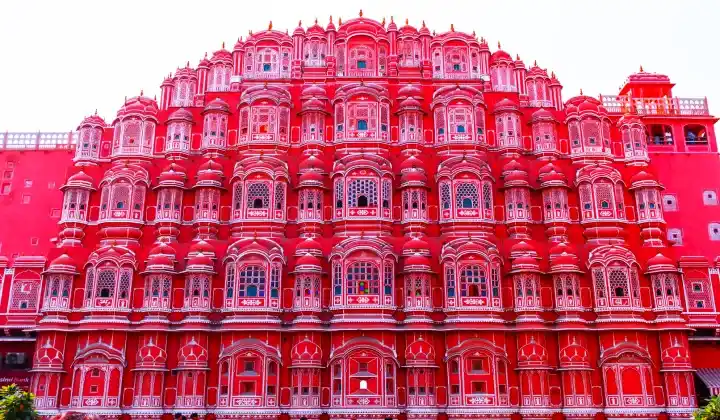
Jaipur was not always pink. For most of its history — founded in 1727 by Maharaja Sawai Jai Singh II — the city was painted in ochre and lime. The pink came in 1876, when the Prince of Wales was due to visit India. The Maharaja ordered the entire walled city painted pink as a gesture of welcome and hospitality. Pink, in Rajasthan, is the colour of welcome.
The colour stuck. Today the walled old city is still painted in that distinctive warm terracotta-pink by law. Every building within the old city walls must maintain the pink exterior. Walking through the bazaars of the old city — surrounded by pink facades, pink arches, pink shops — is one of the most visually extraordinary urban experiences in Asia.
The most iconic structure is Hawa Mahal — the Palace of Winds — a five-storey pink sandstone screen of 953 small windows built in 1799 to allow royal women to observe street life without being seen. It is the most photographed building in Jaipur and one of the most distinctive architectural works in all of India.
- Hawa Mahal — Palace of Winds — the iconic 953-window pink façade
- Amber Fort — the magnificent hilltop fortress 11 km from the city
- City Palace — the royal residence still occupied by the royal family
- Jantar Mantar — the world's largest stone astronomical observatory
- Johari Bazaar — the old city gem market, surrounded by pink walls
Jaipur was one of the first planned cities in India — designed on a grid system inspired by ancient Hindu architectural texts. The streets run in a precise cardinal grid, the city is divided into nine rectangular sectors representing the nine divisions of the universe, and the entire layout was calculated by astronomers before a single stone was laid in 1727.
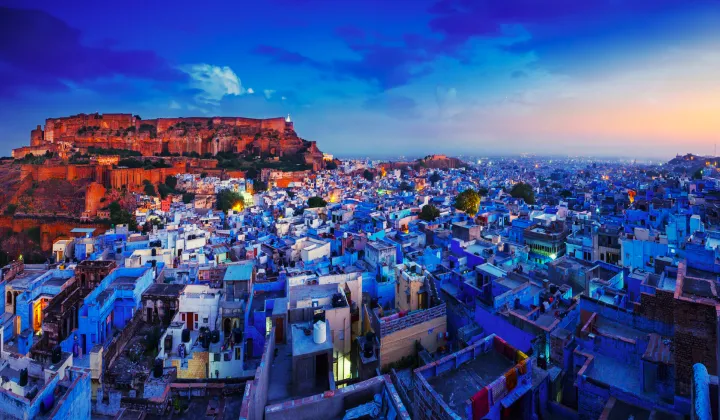
The blue of Jodhpur has a more ancient origin than Jaipur's pink. The original explanation is practical — indigo blue paint mixed with copper sulphate acts as a natural insect repellent and keeps buildings cool in the desert heat. But the cultural reason runs deeper: blue was traditionally the colour of the Brahmin caste and Jodhpur's old city had a high Brahmin population who painted their homes blue to mark their status.
Over centuries the blue spread beyond the Brahmin quarter and became the colour of the entire old city. Today the view from the ramparts of Mehrangarh Fort looking down over Jodhpur is one of the most spectacular urban panoramas in the world — a sea of vivid blue houses washing around the base of the enormous fort like a tide against a cliff.
Jodhpur is also where the riding trouser was born — the Jodhpurs worn in polo and equestrian sports worldwide were designed here by Maharaja Pratap Singh in 1889. The city has been quietly influencing the world for centuries.
- Mehrangarh Fort — the greatest fortress in Rajasthan, rising 120 metres above the city
- Old Blue City walk — the medieval lanes painted vivid indigo below the fort
- Jaswant Thada — the elegant white marble memorial known as the Taj Mahal of Marwar
- Clock Tower and Sardar Market — the heart of the old city bazaar
- Umaid Bhawan Palace — one of the world's largest private residences, still occupied
The single best view in Jodhpur — and arguably in all of Rajasthan — is from the ramparts of Mehrangarh Fort at late afternoon, looking down over the blue city with the desert stretching beyond. Your TTI Tours guide knows exactly which section of the fort wall gives the widest, most dramatic view. Do not leave Jodhpur without this photograph.
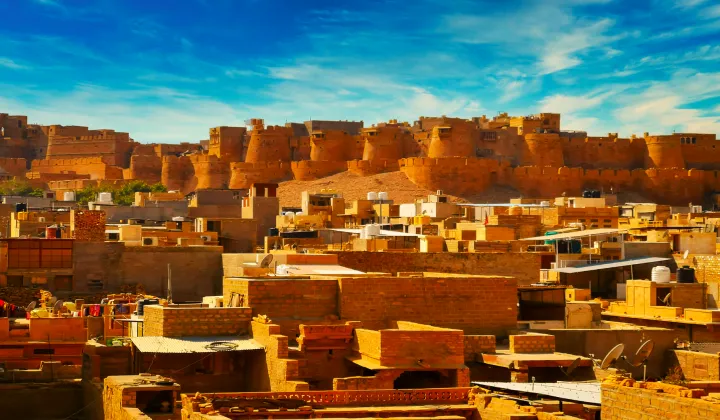
Jaisalmer did not choose its colour — the desert gave it. The entire city, including the magnificent 12th-century fort, is built from the local yellow sandstone of the Thar Desert — a warm honey-gold that changes colour dramatically through the day. At sunrise it is pale gold. By midday it is bright amber. At sunset it burns deep orange — the fort appearing to glow from within, as if lit by the desert itself.
Jaisalmer Fort — Sonar Quila, the Golden Fort — is one of the largest fully preserved medieval fortresses in the world and one of only a handful of living forts on earth. Approximately 3,000 people still live within the fort walls — in houses, havelis, temples and hotels that have been continuously occupied for nearly 900 years. Walking inside is not a museum experience — it is walking into a medieval city that never stopped being a city.
The havelis — the ornately carved merchant mansions built by Jaisalmer's wealthy silk and spice traders — are among the finest examples of stone carving in India. The Patwon Ki Haveli, built between 1800 and 1860, has a façade so intricately carved it appears almost to be made of lace.
- Jaisalmer Fort — Sonar Quila — the living golden fort with 3,000 residents
- Patwon Ki Haveli — five mansions with the finest stone carving in Rajasthan
- Sam Sand Dunes — camel safari at sunset and overnight desert camp
- Gadisar Lake — the ancient reservoir at the city edge, best at sunrise
- Old City Bazaar — gold and silver jewellery, camel leather and textiles
Jaisalmer Fort is one of the world's few remaining living forts — people have lived continuously inside its walls since it was built in 1156 AD. The fort contains temples, havelis, hotels and shops within its medieval walls. At night, when the fort is lit from below, it glows gold against the dark desert sky in a way that has made it one of the most photographed fortresses in Asia.
Which City is Best for Photography?
Each coloured city offers a completely different photographic experience
🌸 Jaipur
Best for ArchitectureHawa Mahal at golden hour, the pink bazaars, Amber Fort reflections in the moat. Best light: 7–9 AM and 4–6 PM. Shoot from street level looking up at the pink facades.
💙 Jodhpur
Best for CityscapesThe fort rampart panorama over the blue city is unmissable. Best light: late afternoon when the blue deepens. The blue lanes below the fort are extraordinary at any hour.
✨ Jaisalmer
Best for Desert LightThe fort at sunset burns amber-gold unlike anything else in India. Add the Sam Sand Dunes camel safari and you have two of the most spectacular photographic experiences in Asia.
If photography is your primary reason for visiting Rajasthan, the ideal sequence is Jaipur first — then Jodhpur — then Jaisalmer. The colours build in intensity as you travel west — from the subtle terracotta pink of Jaipur to the vivid indigo of Jodhpur to the blazing gold of Jaisalmer at sunset. The visual journey is as dramatic as the physical one.
How to Visit All Three Coloured Cities in One Tour
The three coloured cities of Rajasthan sit in a natural west-facing arc from Jaipur — making them perfect to visit in sequence on a single tour. Jaipur to Jodhpur is approximately 340 kilometres — around 5 hours by private vehicle. Jodhpur to Jaisalmer is approximately 280 kilometres — around 4.5 hours.
On the TTI Tours 8 Day Golden Triangle Rajasthan Tour, all three coloured cities are visited in sequence — Jaipur on Days 4 and 5, Jodhpur on Day 6, and Jaisalmer on Days 7 and 8 including the overnight desert camp at Sam Sand Dunes. The tour begins in Delhi, includes Agra and the Taj Mahal, and covers the full Golden Triangle and Rajasthan in one complete journey.
Every transfer between cities is by private air-conditioned vehicle. Every city has a dedicated expert local guide. No group coaches, no fixed timings, no rushing — the tour moves at the pace that allows you to actually experience each city rather than photograph it from a moving bus.
🎨 Jaipur · Jodhpur · Jaisalmer — all three coloured cities of Rajasthan are included in our 8 Day Golden Triangle Rajasthan Tour from USD 820 per person. Private guide in every city, all transfers included, desert night at Sam Sand Dunes included. WhatsApp us for a full quote today.
Trusted by travellers worldwide
⭐⭐⭐⭐⭐ Rated Excellent · TTI Tours
🟢 Read Our Reviews on TripAdvisor →Visit All Three Coloured Cities in One Tour
8 days · Private guides · All transfers · Desert night included · From USD 820 per person
💬 WhatsApp Us — Get a Quote in 1 Hour
Blogs Frequently Asked Questions
Jaipur was painted pink in 1876 as a gesture of welcome for the Prince of Wales — the future King Edward VII — who was visiting India. The Maharaja of Jaipur ordered the entire walled city painted in terracotta pink, the Rajasthani colour of hospitality. By law, all buildings within the old city walls must still maintain the pink exterior today.
Jodhpur is called the Blue City because the houses of the old city are painted vivid indigo blue. The colour originated with the Brahmin caste who painted their homes blue to mark their status — and spread over centuries until the entire old city was blue. The view from Mehrangarh Fort looking down over the blue city is one of the most spectacular urban panoramas in the world.
Jaisalmer is called the Golden City because the entire city — including its magnificent 12th-century fort — is built from local honey-gold sandstone from the Thar Desert. The stone changes colour dramatically through the day, from pale gold at sunrise to deep amber at sunset, when the fort appears to glow from within. The colour was not chosen — the desert gave it.
Jaipur — the capital of Rajasthan — is known as the Pink City of India. The walled old city has been painted in terracotta pink since 1876 and all buildings within the old city walls are legally required to maintain the pink exterior. Jaipur is located approximately 300 kilometres southwest of New Delhi — around 4.5 hours by private vehicle.
Jodhpur is called the Blue City of Rajasthan. The old city surrounding the base of the magnificent Mehrangarh Fort is painted in vivid indigo blue — a colour that originated as a Brahmin caste marking and spread over centuries to become the identity of the entire city. Jodhpur is located approximately 340 kilometres west of Jaipur.
Yes — all three coloured cities can be visited comfortably in one tour. Jaipur, Jodhpur and Jaisalmer sit in a natural west-facing arc across Rajasthan. TTI Tours visits all three on the 8 Day Golden Triangle Rajasthan Tour from USD 820 per person — with private guides and transfers in every city and a desert night at Sam Sand Dunes included.
The best order is Jaipur first — then Jodhpur — then Jaisalmer, travelling west. This follows the natural geographic arc across Rajasthan and builds visually — from the subtle terracotta pink of Jaipur to the vivid indigo of Jodhpur to the blazing gold of Jaisalmer at sunset. This is exactly the sequence followed on the TTI Tours Golden Triangle Rajasthan Tour.
Each city offers a different photographic experience. Jaipur is best for architecture — Hawa Mahal and Amber Fort. Jodhpur is best for cityscapes — the panorama of blue houses from Mehrangarh Fort ramparts is unmissable. Jaisalmer is best for desert light — the golden fort at sunset and the Sam Sand Dunes camel safari are two of the most photographed experiences in Asia.
Related Travel Guides
Recent Comments
Just wrapped up the most incredible Luxury Golden Triangle Tour in India! Every detail was flawlessly managed, from opulent stays to seamless experiences. Huge thanks to Ashu, our amazing travel agent, for making it truly unforgettable. Highly recommend for a premium journey!
Subcategories
Famous India Tours
Festivals In India

Leave a Comment